

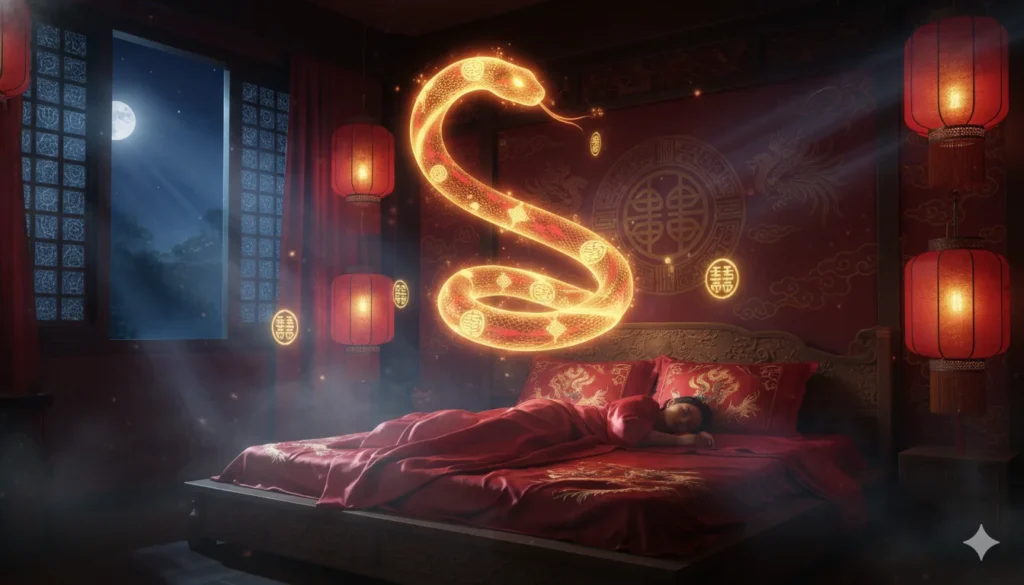
Dreams have an important role in Chinese culture and traditional beliefs. In Chinese dream interpretation, animals often carry symbolic meanings connected with a person’s life, fortune, and emotions. Seeing a snake in a dream can have both positive and negative meanings depending on the situation in the dream. In general, the snake dream meaning in Chinese culture is often related to wisdom, transformation, intuition, and hidden power.
One common interpretation of a snake dream in Chinese tradition is wisdom and intelligence. In Chinese symbolism, the snake is considered a clever and thoughtful creature. Seeing a snake in a dream may suggest that the dreamer is gaining knowledge or becoming more aware of important situations in life. It may also mean that the dreamer needs to think carefully and use wisdom when making decisions.
Another meaning of a snake dream in Chinese culture is transformation and personal change. Snakes are known for shedding their skin, which symbolizes renewal and growth. A snake appearing in a dream may represent that the dreamer is going through a period of change or development. This change might involve personal growth, career progress, or emotional transformation.
The behavior of the snake in the dream also affects its meaning. If the snake appears calm or peaceful, it may symbolize luck, wisdom, and protection. However, if the snake is chasing or attacking the dreamer, it could represent hidden fears, conflicts, or challenges that need attention. The dream may be encouraging the dreamer to face these issues with patience and intelligence.
You may like this blog ➡️snake dream meaning in buddhism
In conclusion, the snake dream meaning in Chinese culture is often linked with wisdom, transformation, awareness, and hidden power. While every dream can have a personal interpretation, many Chinese traditions see snake dreams as signs that encourage reflection and careful thinking. Understanding these dreams may help a person gain insight into their life and make better choices for the future.